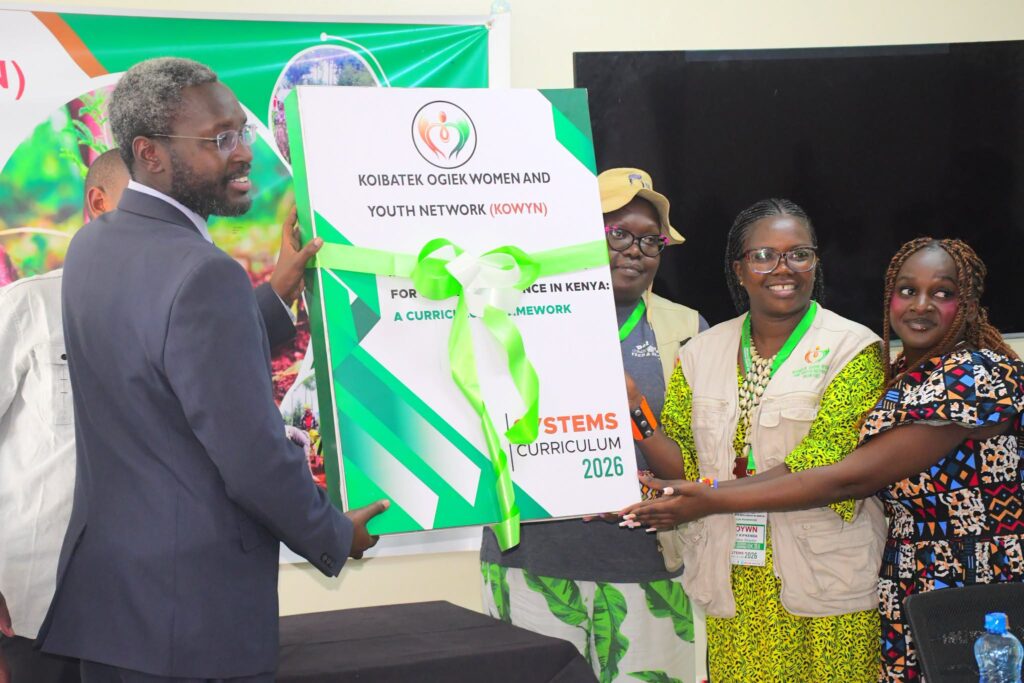
Indigenous-Led Agroecology Curriculum Launch
KOWYN is proudly launching the Indigenous-Led Agroecology for Climate-Resilient Kenya Curriculum in Eldama Ravine, marking a remarkable milestone for Baringo County.
The launch brought together friends, partners, government representatives, civil society organisations, development partners, Indigenous knowledge holders, farmers, women, and youth, all united by a shared commitment to building sustainable and climate-resilient food systems. It was a day that reflected the spirit of the curriculum itself: many voices, many knowledge systems, one shared purpose.
A Milestone Graced by Distinguished Guests
KOWYN was honoured to have Hon. Clint Moi as Guest of Honour, alongside various stakeholders who joined to celebrate this important occasion. We are deeply grateful to him for gracing the event and for recognising the importance of community-led approaches to building climate-resilient food systems.
A special appreciation goes to all the stakeholders and partners who joined, including representatives from KALRO, KEFRI, the Ministry of Agriculture, civil society organisations, Egerton University, Marigat, Samburu Women Trust, community members, Indigenous knowledge holders, and Elphas Masanga, one of the experts who contributed to the development of the curriculum.
Your presence made this occasion truly special. More importantly, your contributions, knowledge, and commitment helped shape a curriculum that is rooted in our communities and responds to the realities we face.
A National Curriculum, First Launched in Baringo
This is a remarkable milestone. The Indigenous-Led Agroecology for Climate-Resilient Kenya Curriculum brings together Indigenous knowledge, agroecological practices, and climate-resilient approaches to agriculture and food systems for communities across Kenya, and we celebrate that Baringo is where it has been launched first.
That matters. It means the county where communities have long practised and protected Indigenous farming knowledge is now the place where that knowledge has been formally recognised and woven into a curriculum designed to serve the whole nation.
Recognising Indigenous Knowledge as a Foundation for the Future
The curriculum recognizes the value of Indigenous knowledge and community-led solutions in addressing climate change, strengthening food sovereignty, protecting biodiversity, and promoting sustainable livelihoods.
We believe that the knowledge held within our communities has an important role to play in shaping a more sustainable and resilient future. This curriculum is a bridge between generations, knowledge systems, and practice. It honours what communities already know while opening space for new learning and new connections.
When Indigenous knowledge sits at the foundation rather than the margins, the solutions that follow are stronger, more relevant, and more lasting.
Together, we are building resilient communities, strengthening food sovereignty, and ensuring that Indigenous knowledge continues to inform the future of agriculture.