Empowering Kwombereriet Ogiek Women Group on Agroecology
8 August 2024, Mumberes, Baringo County – Following KOWYN‘s partnership with Cultural Survival, we hosted an Agroecology training for the Kwombereriet Ogiek Women Group. The training was done as part of our Seeds of Change Project. The Keepers of the Earth Fund financed the project.
Fun Fact: Kwombereriet is a medicinal tree found in the Mau Forest. It has long been a traditional herb before hospitals and modern medicine. Some shrubs and trees would be mixed with other ingredients to ensure effectiveness while others were prepared and administered plainly.
The women gave the team a warm welcome by offering tea and bread as expected in many Kenyan homes when guests arrive. As the training commenced, they danced their way into the venue singing Ogiek songs. After the introductions by both the Kwombereriet group and the KOWYN team, the training began.
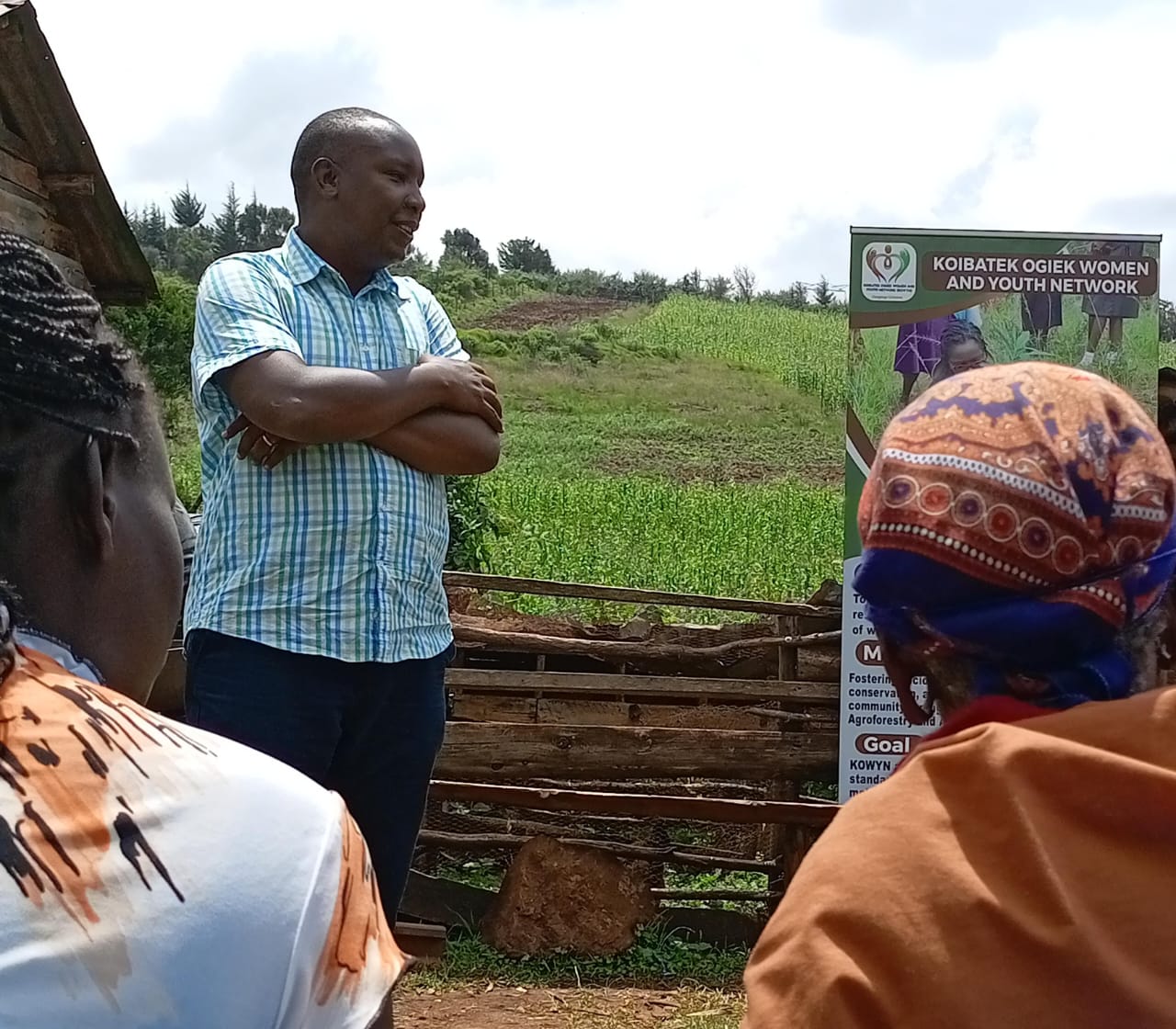
Hosea K. Kandagor conducted the training. He is passionate about nurturing regenerative futures through sustainable agroecological production models. He is also keen on climate finance deliberations. Additionally, Hosea is a Certified Public Accountant of Kenya with a Diploma in Project Management from the Kenya Institute of Management (KIM), a Bachelor of Commerce (KCA University), a Permaculture Design Certificate (Laikipia Permaculture Centre) and currently doing research work for his MSC Development Finance (KCA University).
Key highlight: Hosea trained the group in the local dialect. This helped the participants connect with him. It was evident from their questions, laughter, nodding, and full attendance from start to finish, despite the threat of rain.
He presented a simplified, yet holistic, way to think about their lived experience and how to maximize the opportunity they have as an indigenous community. He described essential components of agroecology as related to the Ogiek people and emergent properties that they can harness from indigenous knowledge. Hosea also brought to light the enabling conditions present in Baringo County that are sufficient in climate transitions towards sustainable agriculture and attaining alternative food systems away from beekeeping, hunting, and gathering.
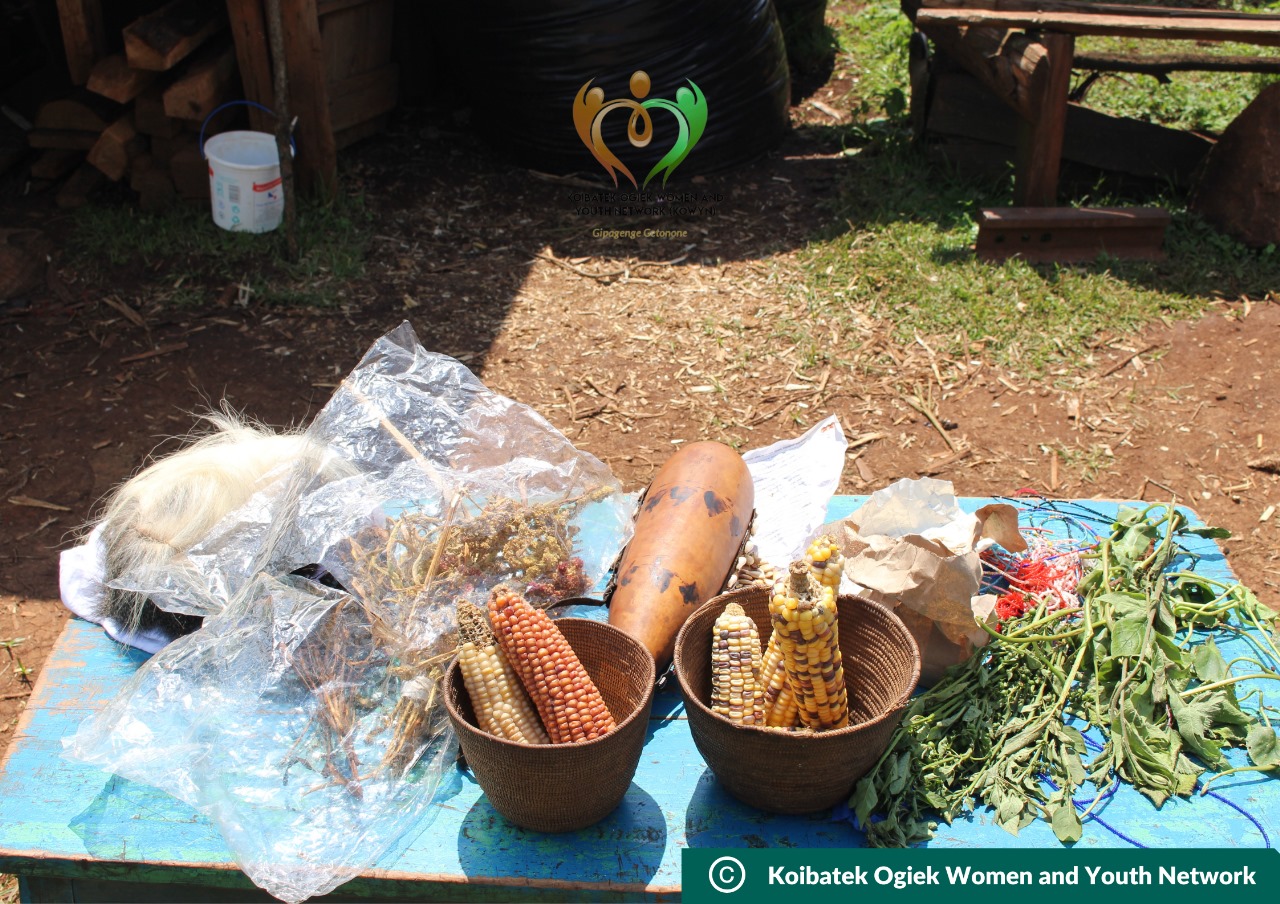
During the session, the group was keen on teaching us their ways as well. They displayed traditional artifacts, seeds, and regalia from the Ogiek. Gogo, as she is termed inhouse, demonstrated how the plants and tools were used during their initial habitation in the Mau Forest.
Sadly, the forced evictions continue eroding the rich culture of the Ogiek Indigenous people obligating them to find new adaptation methods to food security, health, and farming practices.
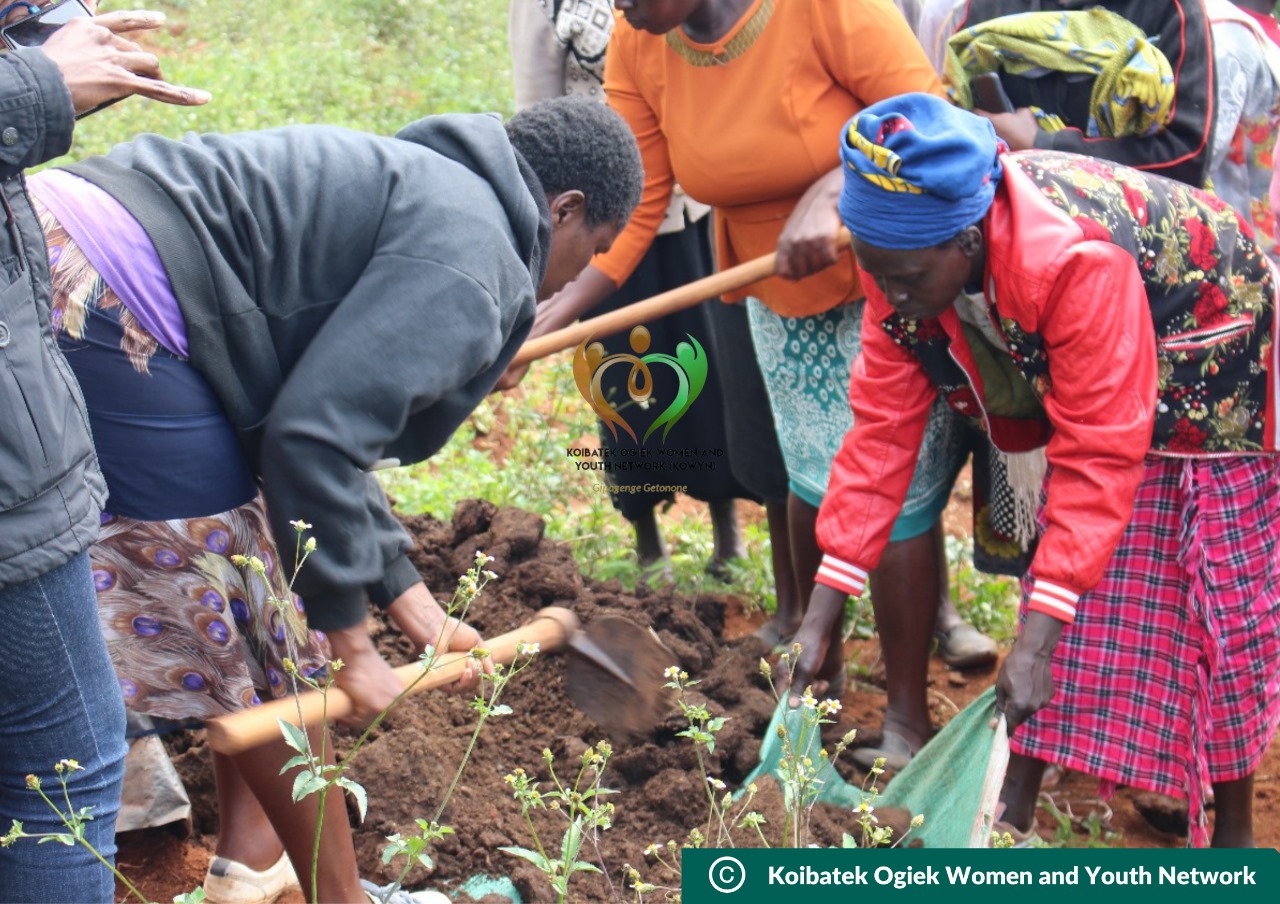
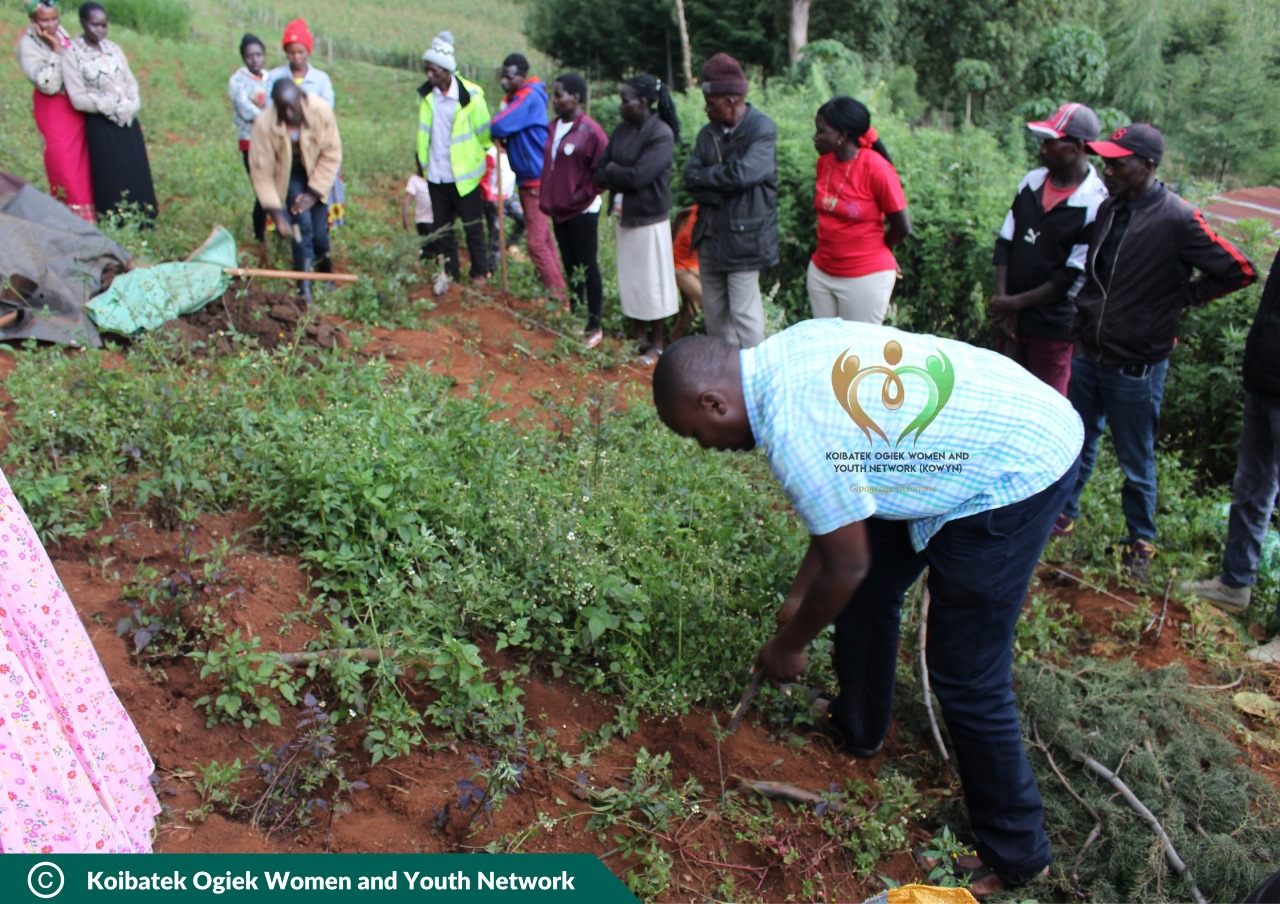
After the theory discussion, the group moved to the farm for practical application. The farm demonstrations were conducted by the community members under the instruction of Hosea.
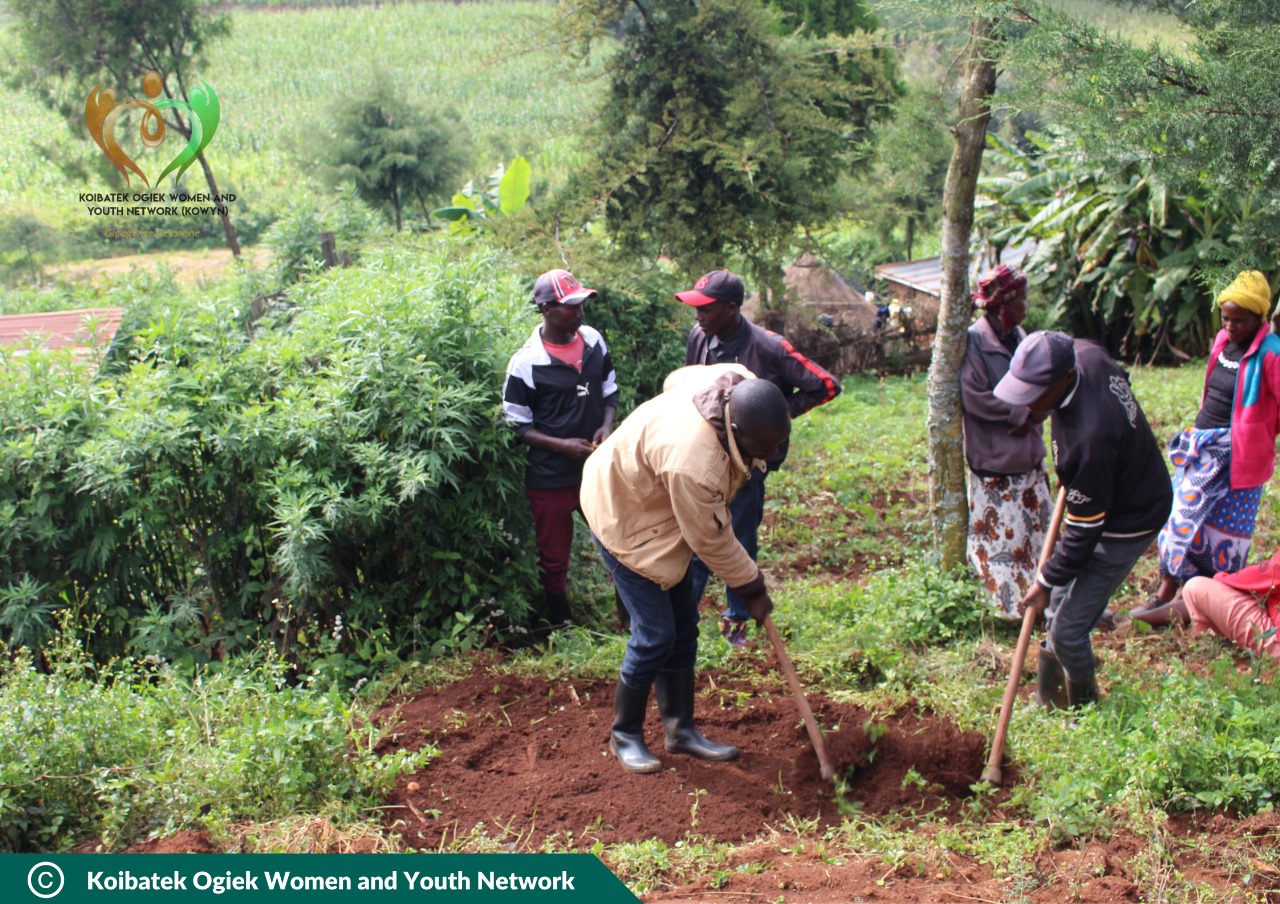
The next session went through farm practices that yield better soil fertility as well as increased production. Hosea showed them the recommended dimensions between plants, and the logic behind the distance as well as what to plant to keep off pests and weeds naturally.
At the end of the training, we shared a meal prepared by the Kwombereriet group. This practice, as alluded to earlier is the embodiment of community values; the currency of generosity that has earned not only the Ogiek Indigenous People the ubuntu tag but the wider African continent.

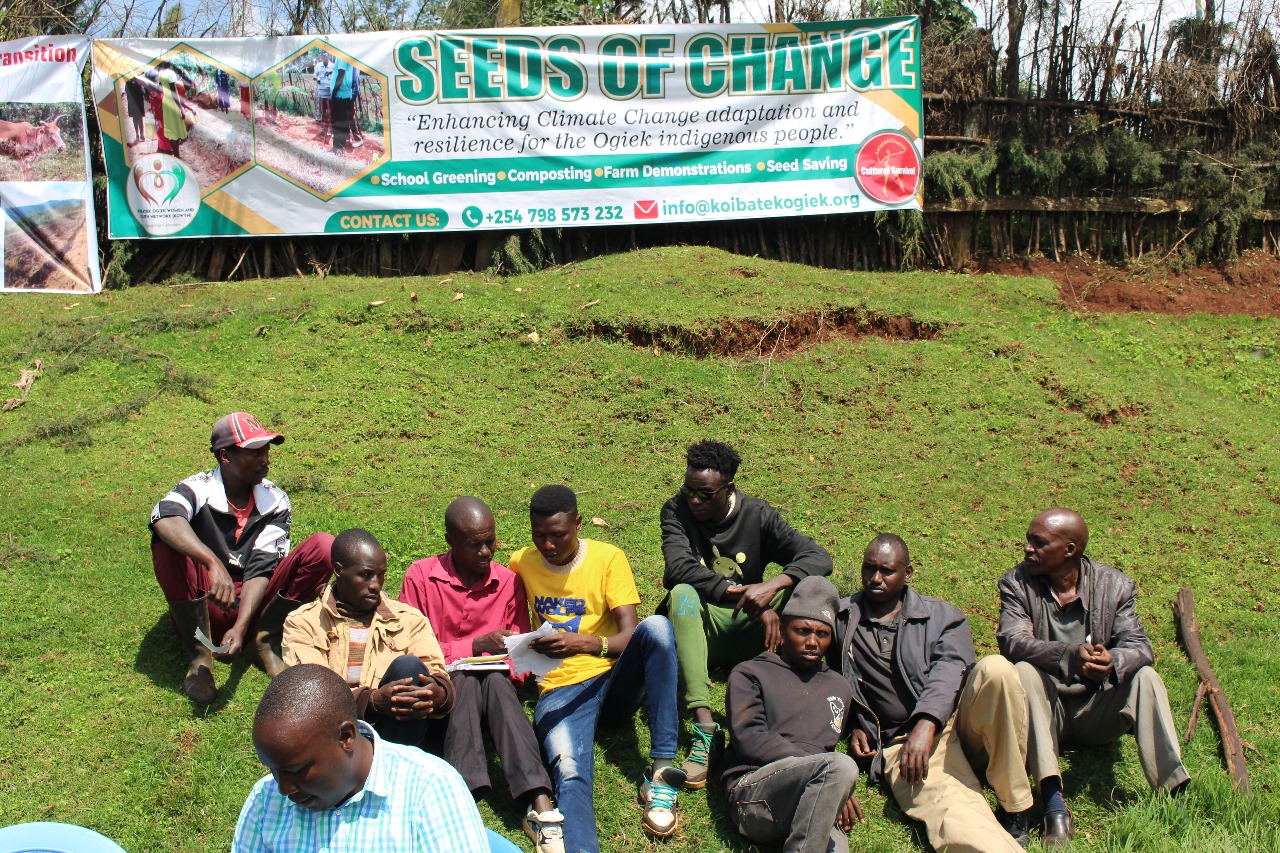
As we conversed, we discovered that sustainable farming in the Ogiek community will only be possible if both men and women work together. It was therefore imperative that the men were present in the Kwombereriet Women group meeting. The women said that they had to ask for land from their husbands to farm. The men in the gathering seemed willing as the benefits of agroecology outweighed many cultural nuances.
Kwombereriet Ogeik Women Group is just the beginning. KOWYN looks forward to more enriching sessions with the Ogiek community as we intensify efforts on climate action. A hearty thank you to the team, Judy Kipkenda, Sarah Nasimiyu, and Karen Kilwake for their dedication and hard work as we implement the Seeds of Change project with Cultural Survival.
Want to learn more about our work? Follow our social media pages so that you don’t miss an update!
Compiled and written by Karen Nabwire Kilwake – Communications and Research Administrator, KOWYN.